This edition is more than three days old. Check the original sources for subsequent changes.
In this edition
Today's five reads connect AI-assisted experiments, marketing operations, workspace tools and scientific discovery. The through-line: useful automation needs a clear task, measurable value and honest limits. Original publication dates are preserved; Google's subscription overview is a recap, not five new launches.
OpenAI describes an MIT researcher connecting Codex to laboratory software to run and refine qubit measurements. With measurement-specific instructions, the agent could complete routine sequences when signals were clear. Weak or noisy signals were harder and sometimes required expert guidance. This is a reported laboratory workflow, not evidence that AI can independently conduct every kind of scientific experiment.
Start automation with a repeatable task, accessible tools and a clear check on the result. Define when the system should stop and ask for help. The value is freeing attention for harder decisions, not eliminating expertise.
Company-published research case study. Company source. Source checked Sep 10, 2026. Not independently tested.
Writing in Search Engine Land, Kevin Indig argues that internal AI tools create work that marketing plans often overlook: learning, checking outputs, fixing integrations and maintaining workflows. His commentary challenges teams to account for those costs alongside the time a tool appears to save. It is an operational argument, not proof that AI makes every marketing team less productive.
For one workflow, track setup, execution, review and maintenance time over several uses. Compare that total with the old process and a buy-versus-build alternative before expanding it across the team.
Google's September subscription overview highlights Google Pics for visual creation and Sheets canvas for turning spreadsheets into interactive mini-apps. Both are listed for AI Pro and Ultra. The overview also lists Gemini Spark connections with Chrome and Photos for those plans in the US. This is an availability recap with plan and regional limits, not a claim that every feature launched this week.
Check what an existing subscription already includes before adding another tool. Trial one recurring task and verify access in your region; a feature on a plan overview is not a demonstrated result for your workflow.
Subscription feature recap. Company source. Source checked Sep 10, 2026. Not independently tested.
Google and NASA JPL introduced MAPL-EMIT, a model for finding methane plumes in observations from NASA's EMIT instrument. Google's announcement links a global database, a visualization app, model files and inference tools. The work targets detection across noisy terrain. Better detection can guide investigation, but the announcement does not establish that identified emissions have been reduced.
A model becomes more useful when people can inspect its outputs and act on them. Separate detection quality from the operational follow-through needed to deliver an environmental or business result.
Research announcement. Company source. Source checked Sep 10, 2026. Not independently tested.
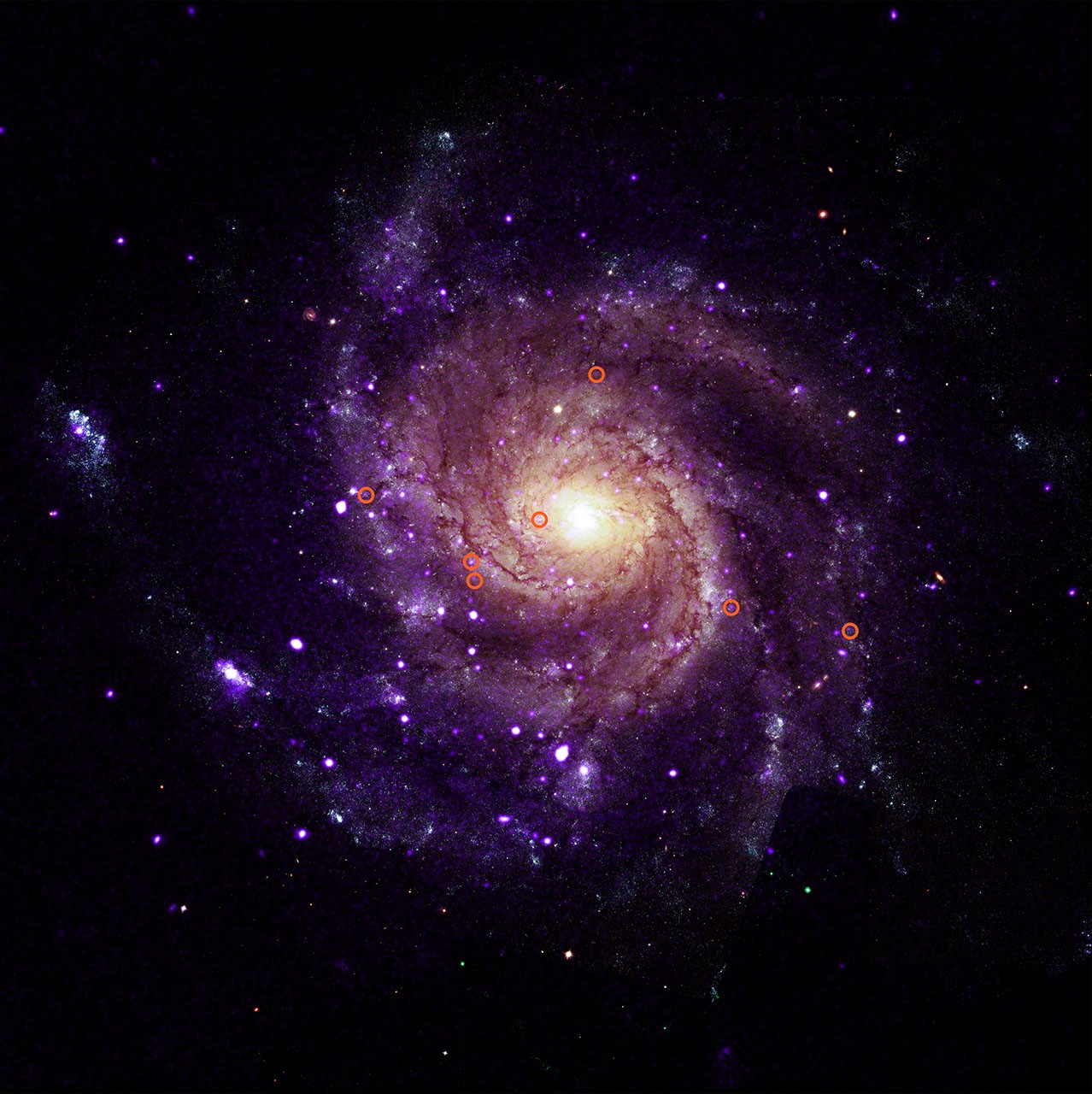
NASA reports that researchers found 84 unusually low-energy X-ray sources across six galaxies in Chandra's public archive. The objects may involve compact stars or black holes drawing material from companions, but their nature remains uncertain. The findings could inform research on stellar explosions and galactic gas; those explanations are possibilities, not solved mysteries.
New discoveries can come from asking a better question of existing data. The useful lesson is to revisit what a collection may have missed, while keeping an observation separate from its proposed explanation.
Observational research report. Research institution. Source checked Sep 10, 2026. Not independently tested.