This edition is more than three days old. Check the original sources for subsequent changes.
In this edition
Five September 29 reports examine lower-cost AI, proactive assistants, community discovery and ways to find value in existing information. Announced capabilities and customer results remain attributed; research models are not treated as real-world guarantees.
OpenAI released GPT-6.1 Sol for the API, ChatGPT Work and Codex, but not yet Chat. Standard API pricing is $2 per million input tokens and $10 per million output tokens, with cached input at $0.10. OpenAI reports performance approaching Astra on several coding and professional-work evaluations. Those are vendor evaluations, not proof of equivalent results on every task. An Ultrafast variant is still forthcoming.
Compare a fixed set of real tasks using quality, review time, retries and total cost. Lower token prices matter only when the finished work still meets the same standard.
Model release and vendor evaluations. Company source. Source checked Sep 30, 2026. Not independently tested.
OpenAI announced Dots, assistants with their own cloud computers and connections to approved apps. Rollout begins for Pro and Business Premium users in eligible markets; Enterprise access requires an administrator to enable the beta. OpenAI distinguishes read-only background research from assigned actions, with rules and review controls for consequential work. Specialist organizational dots remain focused enterprise pilots, and the company cautions that dots can still make mistakes.
Start with a bounded research or draft-preparation task. Specify what the assistant may read, what requires approval and how you will verify completion before connecting more accounts or expanding its responsibilities.
Phased rollout and enterprise pilots. Company source. Source checked Sep 30, 2026. Not independently tested.
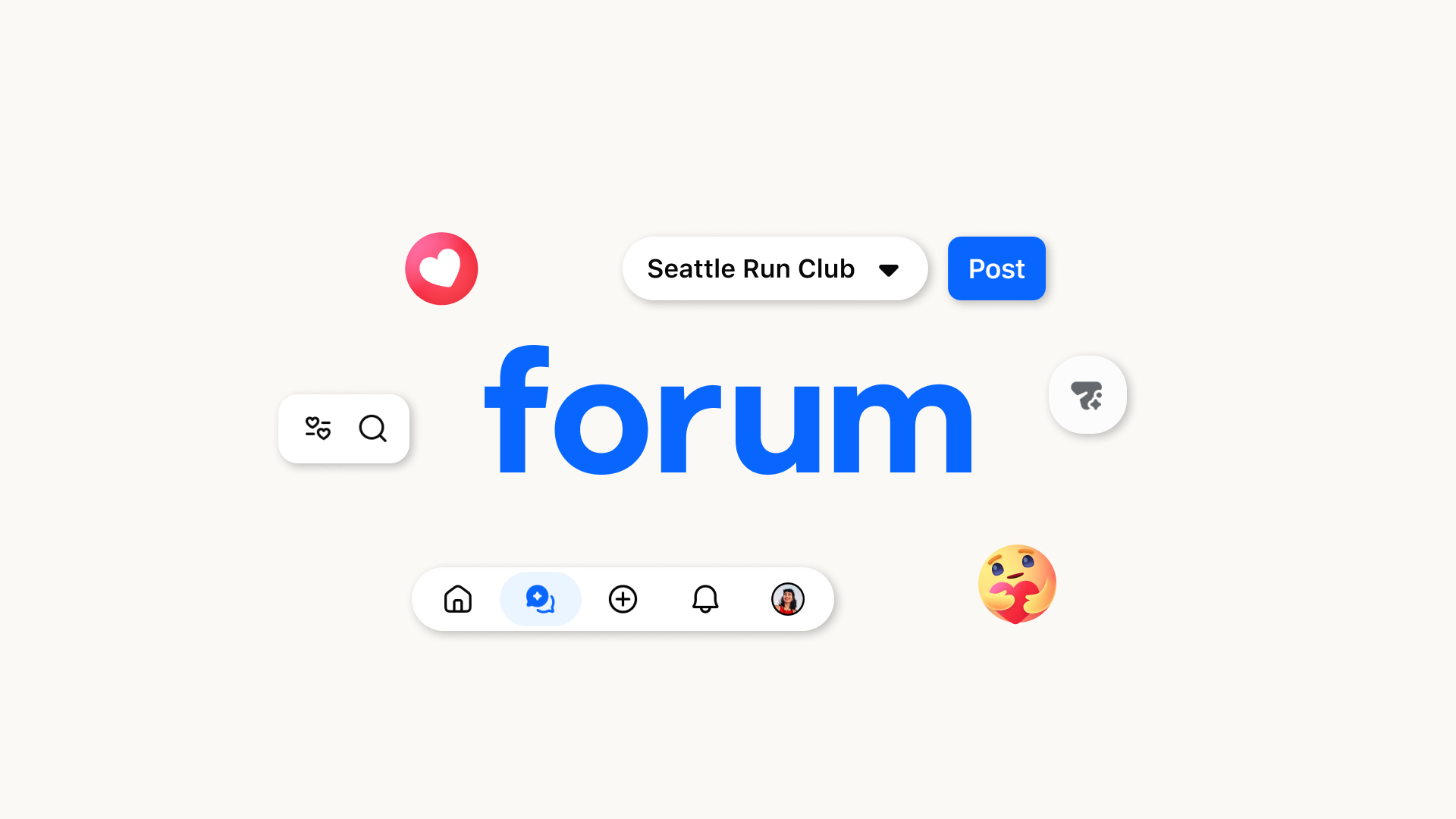
Meta's Forum app brings Facebook groups into a dedicated experience, available in the US on iOS and Android. Testing began in May; this update adds experiments in community recognition, topic exploration and Ask, which uses AI to surface existing posts and comments. New Ask tests compare recommendations and suggest follow-up questions. The announcement is not a global launch or evidence that AI-generated summaries reliably represent every community.
For community-led marketing, useful answers and clear moderation remain more valuable than posting volume. Watch how discovery changes which discussions people find, without assuming the new app creates incremental reach or sales.
US app and feature tests. Company source. Source checked Sep 30, 2026. Not independently tested.
An AWS case study describes Conde Nast using TwelveLabs Marengo on Bedrock and OpenSearch to search visual, audio and transcript signals across more than 140,000 videos. Results point to relevant timestamps rather than relying only on titles. AWS reports discovery time falling from 250 minutes to under two minutes per task. These are implementation-team results, not independently audited savings or a guarantee for another archive.
Before producing more content, test whether existing assets are hard to find. A small archive-search pilot can measure retrieval relevance, rights clearance and editing time while keeping expensive indexing separate from interactive queries.
Customer implementation case study. Company source. Source checked Sep 30, 2026. Not independently tested.
MIT researchers used mathematical models and hiring simulations to examine algorithmic monoculture. They identify risks from shared informational blind spots, but find that some ensemble approaches can perform better than multiple separate algorithms under particular assumptions. Practical feasibility and empirical effects remain open. The research does not show that real-world hiring systems are fair, nor that a single model is best for every organization.
Evaluate correlated errors as well as average accuracy. Multiple tools are not meaningful diversity if they share the same blind spots; retain independent evidence and human review for consequential decisions.
Model-based research, not a field trial. Research institution. Source checked Sep 30, 2026. Not independently tested.